
A 16-channel video installation by Oliver Ressler
2003–2008
After the loss of a counter-model for capitalism – which socialism, in its real, existing form had presented until its collapse – alternative concepts for economic and social development face hard times at the beginning of the twenty-first century. In the industrial nations, broadly discussed are only those “alternatives” that do not question the existing power relations of the capitalist system and representative democracies. Other socio-economic approaches are labeled utopian, devalued, and excluded from serious discussion, if even considered at all.
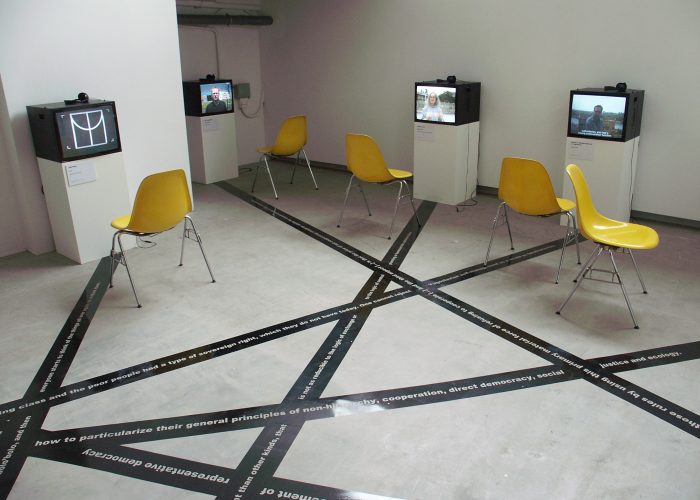
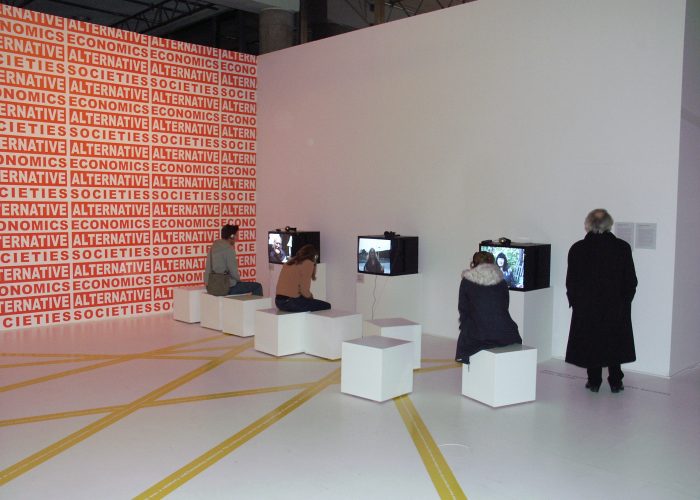
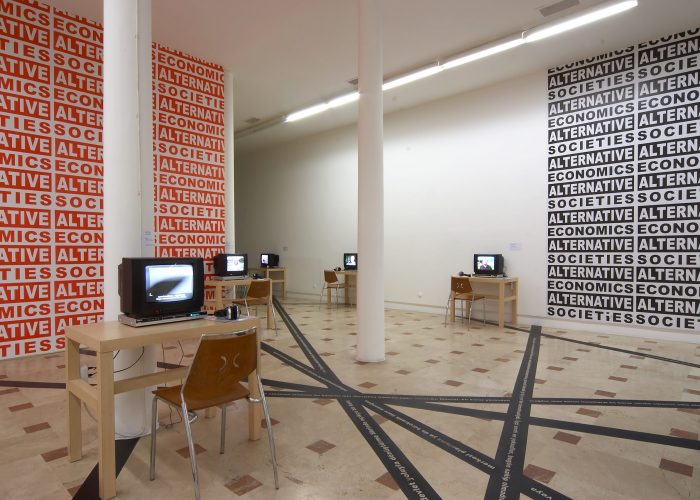
The thematic installation, “Alternative Economics, Alternative Societies”, focuses on diverse concepts and models for alternative economies and societies, which all share a rejection of the capitalist system of rule. An interview was carried out for each concept. Interview partners include economists, political scientists, authors, and historians. From these interviews, a video in English was produced. In the exhibition, these single-channel 20- to 37-minute videos are each shown on a separate monitor, thus forming the central element of the installation.
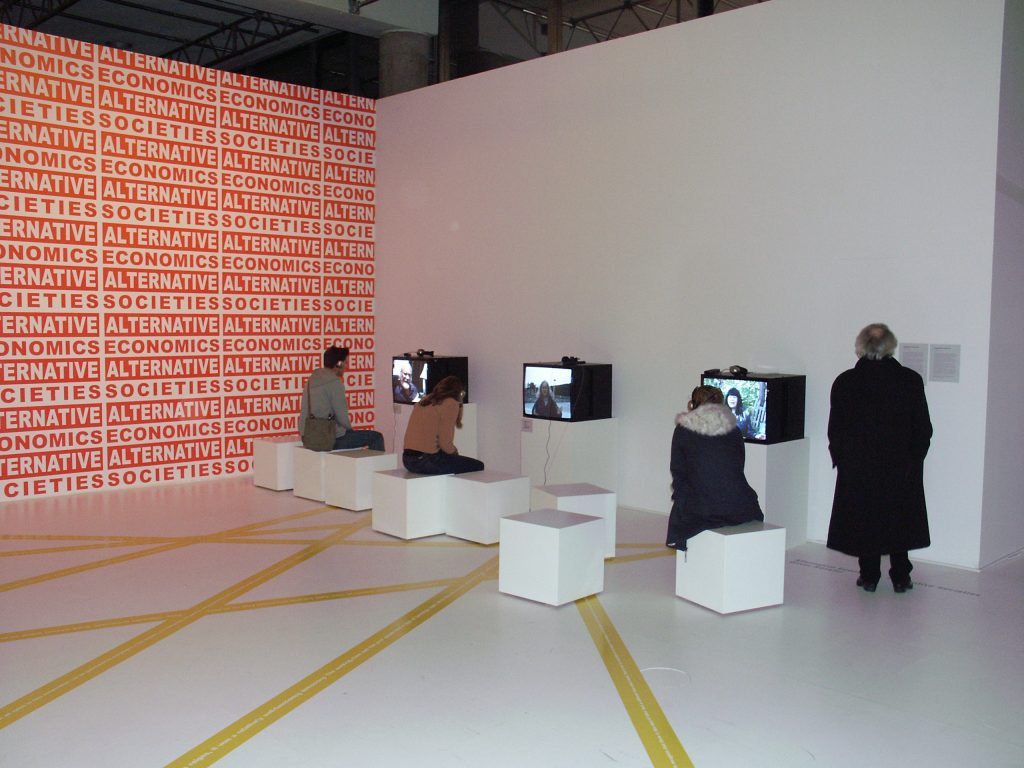
The project presents alternative social and economic models such as “Inclusive Democracy” from Takis Fotopoulos (GB/GR), “Participatory Economy” from Michael Albert (U.S.A.) and “Anarchist Consensual Democracy” from Ralf Burnicki (D). Chaia Heller (U.S.A.) presents “Libertarian Municipalism”, Paul Cockshott (GB) “Towards a New Socialism”, Heinz Dieterich (MX) “The Socialism of the 21st Century”, Marge Piercy (U.S.A.) the feminist-anarchist utopias of her social fantasies, and the underground author p.m. (CH), the ideas of his concept “bolo’bolo.”
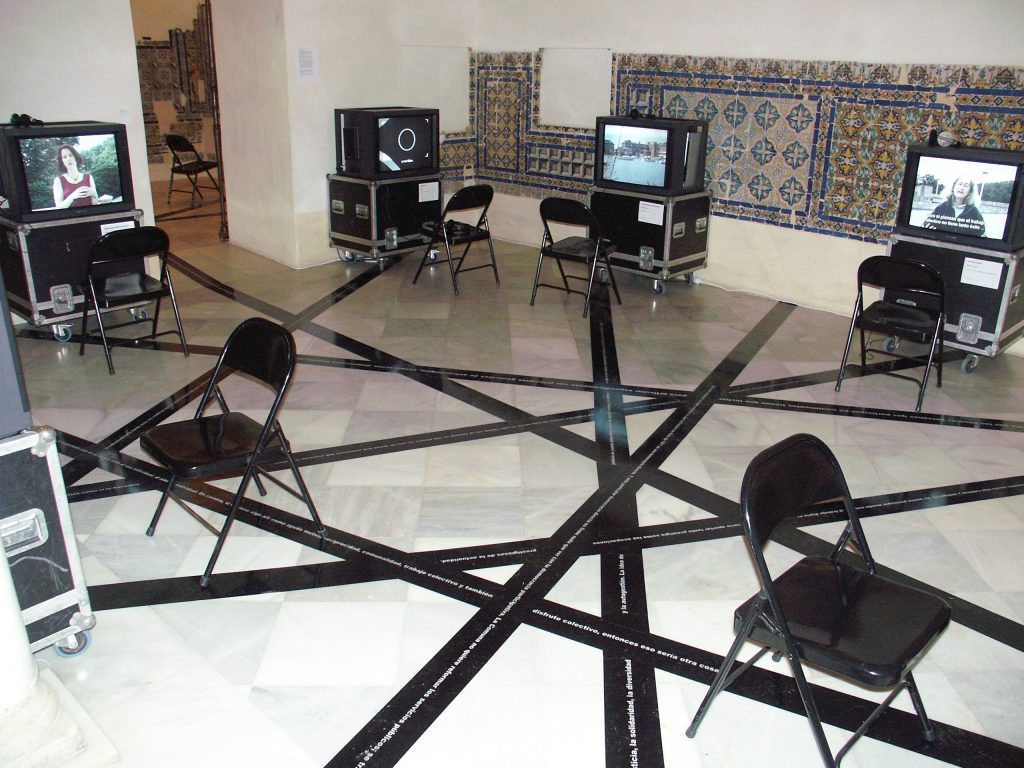
Other videos focus on certain principles that might be of importance when discussing alternative economics and societies: Nancy Folbre (U.S.A.) speaks about “Caring Labor,” Christoph Spehr (D) about “Free Cooperation”, Maria Mies (D) about the subsistence perspective and John Holloway (MX/IE) about his ideas of how to “Change the World Without Taking Power.”
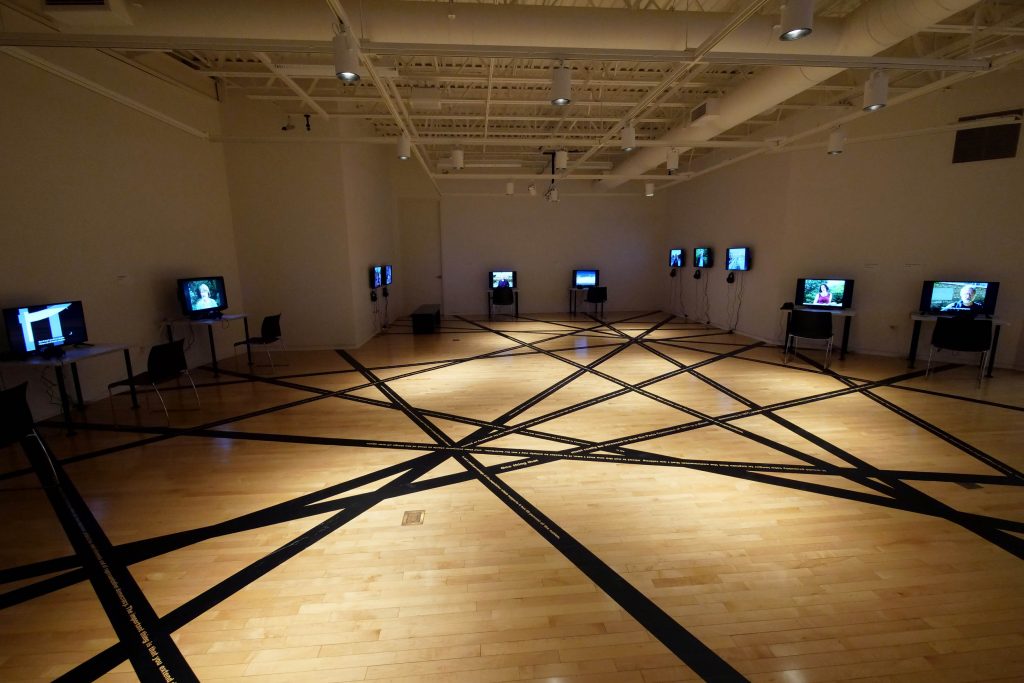
As interesting historical models, Todor Kuljic (SCG), thematizes workers’ self-management in Yugoslavia in the 1960s and 1970s, Salomé Moltó (E) talks about the workers’ collectives during the Spanish Civil War (1936–38), and Alain Dalotel (F) discusses the Paris Commune of 1871. One of the videos discusses the Zapatist Good Government Junta, a self-governing, direct democracy network, which is currently present in certain rural areas of Chiapas, Mexico.
Chosen from each of these 16 videos is one quotation significant for the alternative model that it presents. The quote is placed directly on the floor of the exhibition room as a several meter long text piece. This floor lettering, made from adhesive film, leads exhibition visitors directly to the corresponding videos and thereby provides a kind of orientation within this non-hierarchically arranged pool of videos. These videos offer stimulus and suggestions for contemplating social alternatives and possibilities for action.
The whole exhibition project started in Ljubljana in 2003 with five videos and has grown to include 16 videos with a total length of more than seven hours.
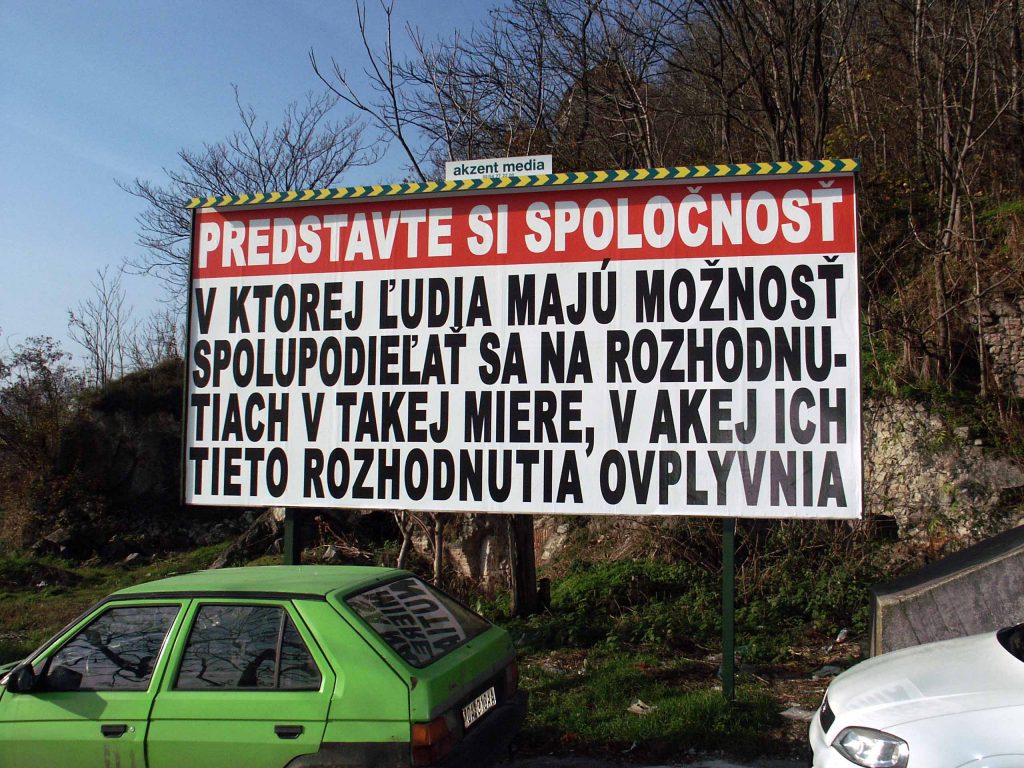
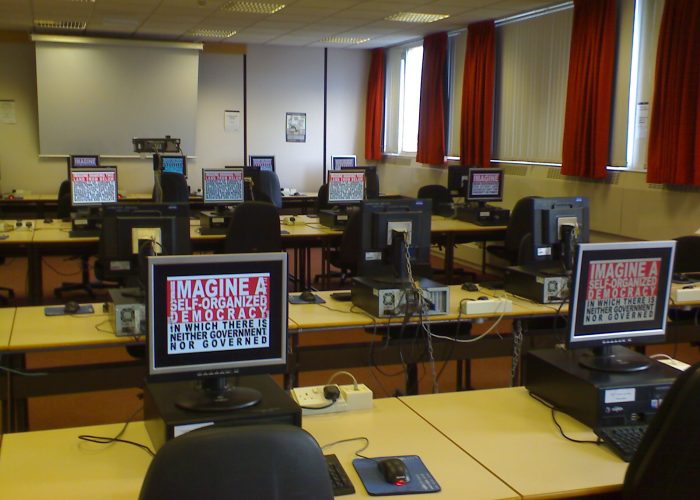
The billboard text reads: Imagine a society in which people have a say in decisions in proportion to the degree that they are affected
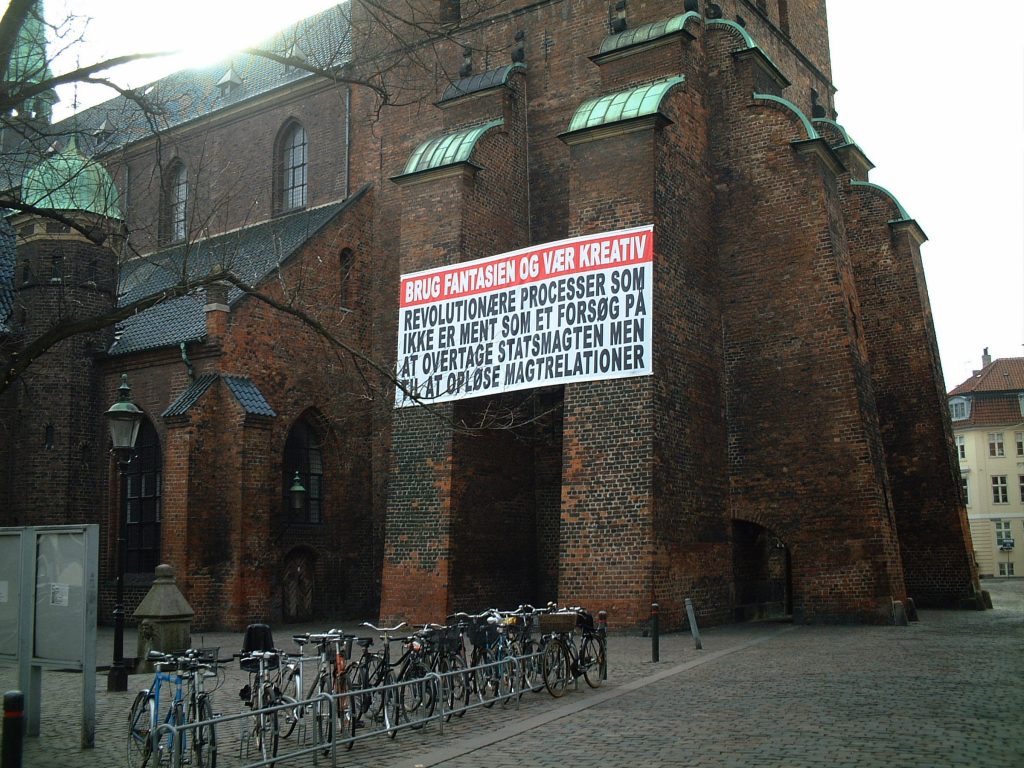
The banner text reads: Imagine and create revolutionary processes which are not intended to take over state power but to dissolve power relations
The installation was extended through billboards, posters and banners carried out in several languages.
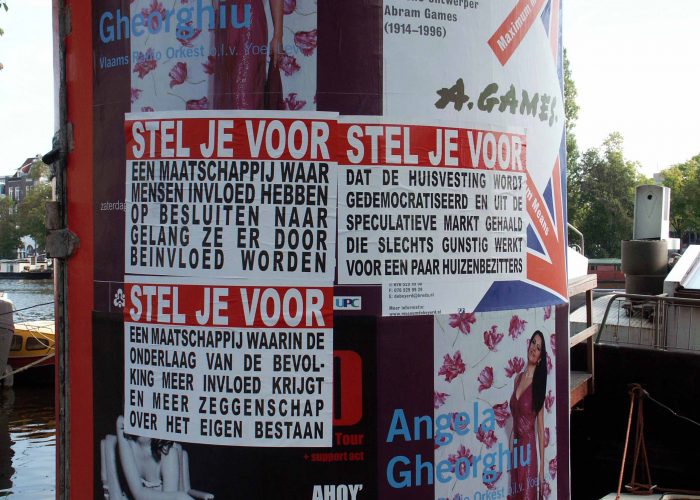 “Alternative Economics, Alternative Societies”. Installation view: “Quicksand in De Pijp”, SKOR, urban space, Amsterdam, 2004
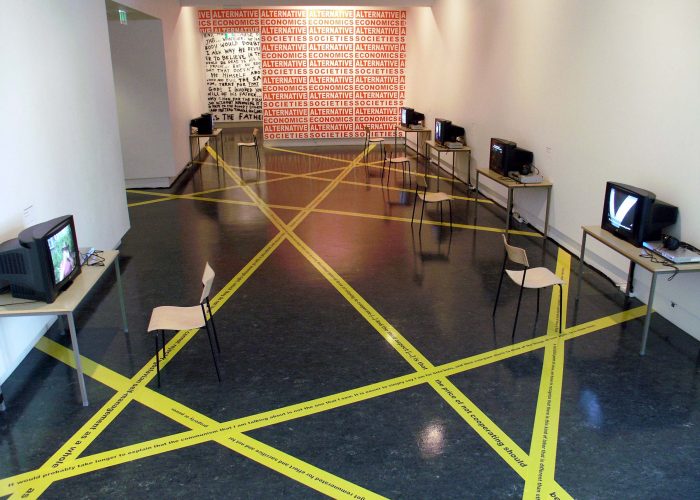
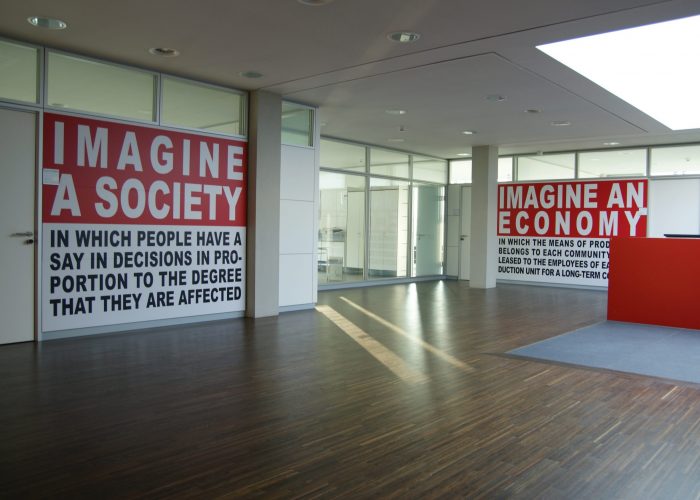
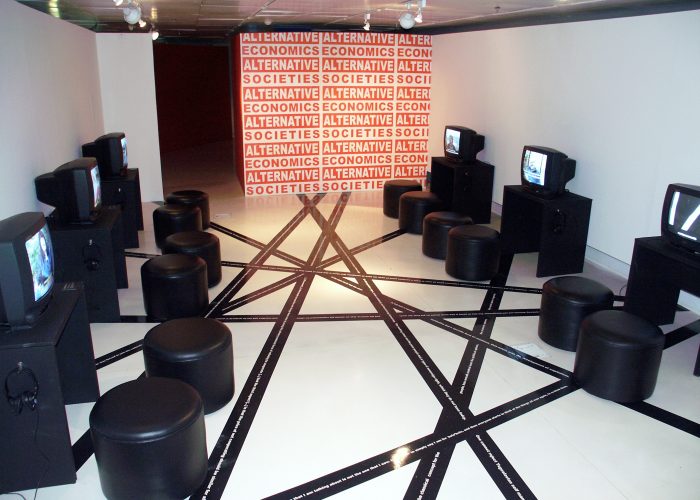
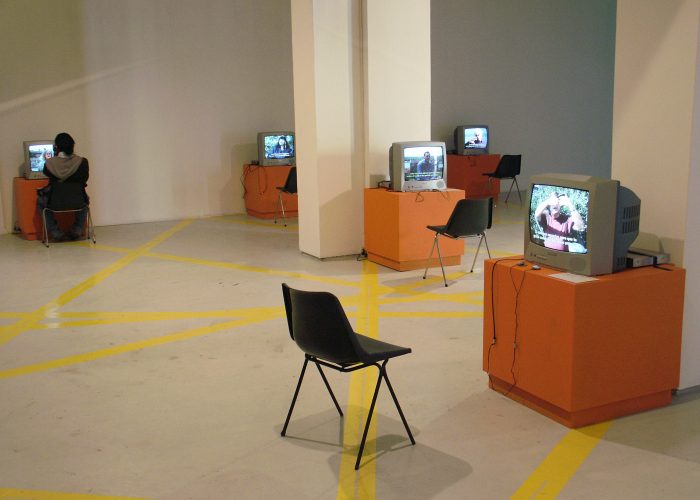
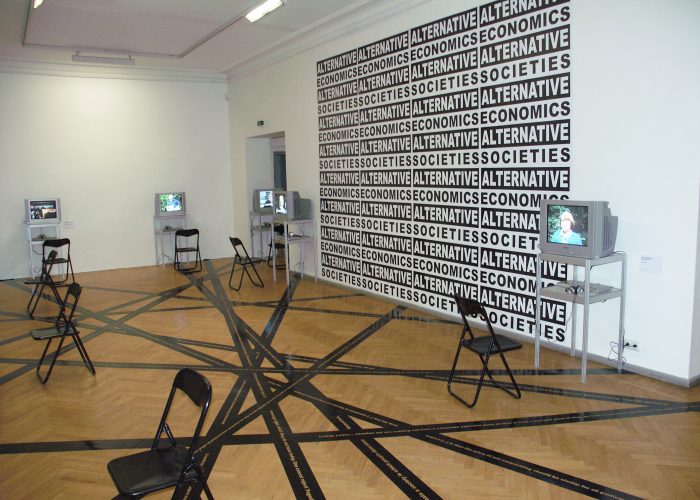
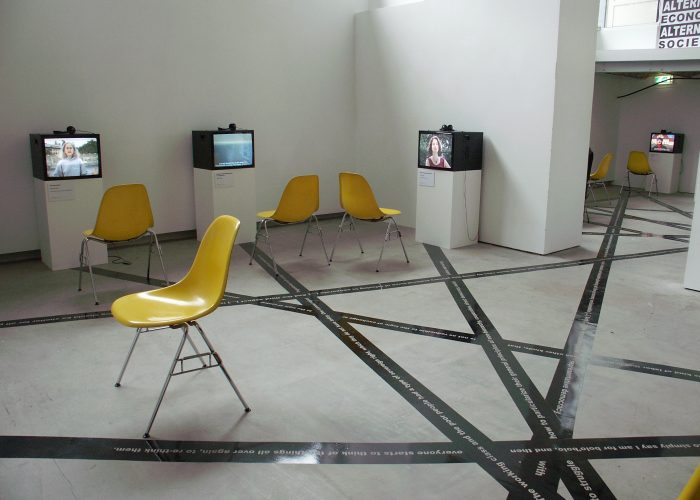
The list of videos:
“Inclusive Democracy”, a video with Takis Fotopoulos, 37 min., 2003
“Workers’ Self-Management in Yugoslavia”, a video with Todor Kuljic, 23 min., 2003
“Utopian Feminist Visions”, a video with Marge Piercy, 24 min., 2003
“Participatory Economics”, a video with Michael Albert, 37 min., 2003
“Caring Labor”, a video with Nancy Folbre, 20 min., 2003
“Free Cooperation”, a video with Christoph Spehr, 32 min., 2003
“bolo’bolo”, a video with p.m., in collaboration with Lia, 22 min., 2004
“Change the World Without Taking Power”, a video with John Holloway, 23 min., 2004
“Workers’ Collectives during the Spanish Revolution”, a video with Salomé Moltó, 22 min., 2004
“The Paris Commune 1871”, a video with Alain Dalotel, in collaboration with Rebond pour la Commune, 25 min., 2004
“Libertarian Municipalism”, a video with Chaia Heller, 32 min., 2005
“Anarchist Consensual Democracy”, a video with Ralf Burnicki, 29 min., 2005
“The Subsistence Perspective”, a video with Maria Mies, 26 min., 2005
“The Zapatista Good Government”, a video with Zapatistas, in collaboration with Tom Waibel, 31 min., 2006
“Towards a New Socialism”, a video with Paul Cockshott, 25 min., 2006
“The Socialism of the 21st Century”, a video with Heinz Dieterich, 26 min., 2007“Anarchist Consensual Democracy”, a video with Ralf Burnicki, 29 min., 2005
The installation “Alternative Economics, Alternative Societies” was presented in the following exhibitions:
“Alternative Economics, Alternative Societies” (solo show), Galerija Skuc, Ljubljana (SI), 2003
“There is no Alternative”, Espace Forde, Genève (CH), 2003
“Alternative Economics, Alternative Societies” (solo show), Kunstraum der Universität Lüneburg (DE), 2004
“fly utopia!”, Transmediale.04, Berlin (DE), 2004
“Open House”, O.K – Center for Contemporary Art, Linz (AT), 2004
“permanent produktiv”, Kunsthalle Exnergasse, Vienna (AT), 2004
“Emoção Art.ficial II – Divergências Tecnológicas”, Itaucultural Institute, Sao Paulo (BR), 2004
“Detox 04. Crossover Jam Culture”, Sorlandets Kunstmuseum, Kristiansand (NO), 2004
“Health and Safety”, Wyspa Institute of Art, Gdansk (PL), 2004
“Economía alternativa, sociedades alternativas” (solo show), Centro Cultural Conde Duque, MediaLabMadrid, Madrid (ES), 2004
“There Must Be an Alternative”, Forum Stadtpark/ Steirischer Herbst, Graz (AT), 2004
“Wayward Economy”, Main Trend Gallery, Taipei (TW), 2005
“Alternativne Ekonomije, Alternativna Drustva” (solo show), Museum of Modern and Contemporary Art, Mali Salon, Rijeka (HR), 2005
“An Ideal Society Creates Itself” (solo show), Platform Garanti Contemporary Art Center, Istanbul (TR), 2005
“Alternativne Ekonomije, Alternativna Drustva” (solo show), kuda.org – New Media Center / Museum of Contemporary Art, Novi Sad (RS), 2005
“Alternativne Ekonomije, Alternativna Drustva” (solo show), Museum of Contemporary Art Belgrade, Salon, Belgrade (RS), 2005
“Critical Societies”, Badischer Kunstverein, Karlsruhe (DE), 2005
“9th International Festival of Video/Arte/Electrónica”, Miroquesada Garland Gallery, Lima (PE), 2005
“Capital (It Fails Us Now)”, Kunstihoone, Tallinn (EE), 2006
“The Unhomely: Phantom Scenes in Global Society”, Second International Biennial of Contemporary Art, Seville (ES), 2006
“After Neurath: Like Sailors on the Open Sea”, Stroom, The Hague (NL), 2007
Museum of Capitalism, Oakland (US), 2017
“Catastrophe Bonds” (solo show), Bush Art Center Galleries, St. Norbert College, De Pere (US), 2018